
UGC ads are short, phone-shot videos of a real person using or talking about your product, made for your brand and run as paid ads on Meta and YouTube Shorts. They work because they look like ordinary posts, so people watch a few seconds longer. With us, a UGC video typically costs Rs 3,000 to 15,000, and we test 3 to 5 hooks per idea.
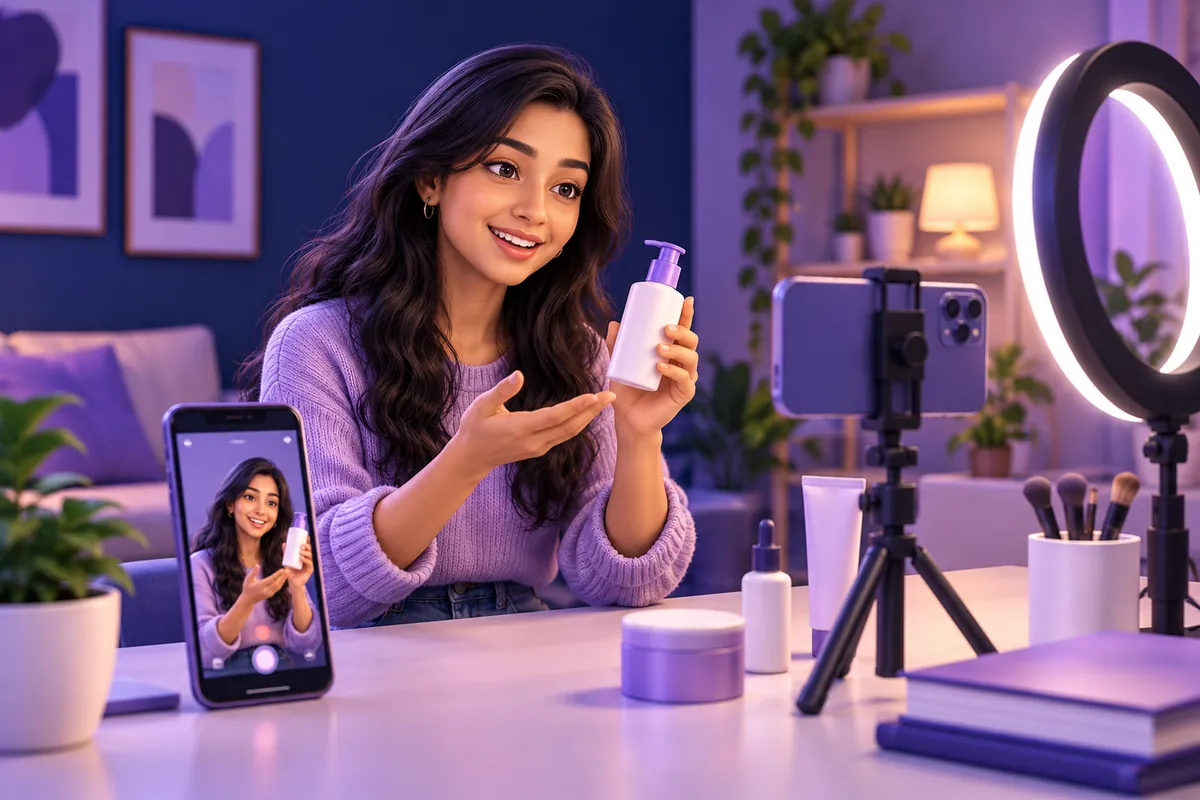
Open Instagram for two minutes and count the ads. The glossy ones get flicked away. The ones that hold you are usually somebody talking into a front camera in their kitchen, and most of those are UGC ads.
Brands ask us about them almost every week, so here's the version we'd give a founder over chai: formats, a script you can borrow, the ASCI rules people skip, and how to read the numbers. No made-up success stories.
What are UGC ads, in plain words?
A UGC ad is a video made by a creator, not a production house, in the style of a customer video, which your brand then runs as a paid ad. UGC stands for user-generated content.
Strictly speaking, true UGC is a customer filming your product unprompted. What most brands run is paid, loosely scripted creator content that looks like that. Nothing wrong with it, as long as nobody presents a paid creator as a random happy customer.
Why do UGC video ads work on Meta and YouTube Shorts?
Because they look like the content people opened the app for. A polished brand film says "ad" in the first half-second; a face talking to camera buys you two or three more seconds, which is often enough to land the problem and show the product.
There's a buying reason too. Meta's ad system tends to do better when you feed it several different creatives, and ten phone videos usually cost less than one day with a crew. So you test ten angles instead of betting the month on two. People also believe faces that look like theirs. A working mother in Surat explaining why she switched to your ready-to-cook mix will convince other working mothers far more than a model in a studio.
Is it magic? No. These videos wear out faster than brand films, and a weak product with great UGC just gets you returns faster.
Which UGC ad formats work, with examples?
Six formats do most of the heavy lifting for Indian D2C brands, and a good first batch usually mixes two or three.
| Format | What it looks like | Works well for | Watch out for |
|---|---|---|---|
| Testimonial-style | Creator explains what bugged them before and what changed | Almost anything | Only claims the creator has actually experienced |
| Unboxing | Opening the parcel, first reactions, what's inside | Gifting, skincare kits, Diwali hampers | Slow starts; get to the product by second 3 |
| Problem-solution | Opens on the annoyance, then the product fixes it | Kitchen, cleaning, personal care, apps | A problem nobody in your audience really has |
| Before-after | Same person or object, two moments in time | Cleaning, home, some beauty | Filters, staged lighting, results that aren't typical |
| Founder POV | The founder on their own phone explaining why they made it | Small D2C brands, new launches | Rambling past 40 seconds |
| Street-style | A creator asks strangers to try, taste or guess something | Snacks, drinks, fun products | Written consent from everyone who appears |
Before-after is the one that gets brands into trouble. Same lighting, same angle, no filter, a realistic timeframe and nothing the product can't back up.
How do you write a 30-second UGC ad script?
Use five beats: a hook in the first 2 seconds, the problem, the product moment, some proof, then the offer. Here's how that looks for a made-up instant dhokla mix (the brand is invented; the structure is the point).
| Seconds | Beat | What happens | Example line |
|---|---|---|---|
| 0 to 2 | Hook | A line or visual that stops the thumb | "Hostel kitchen. One kettle. Fresh dhokla?" |
| 2 to 8 | Problem | The annoyance, in the buyer's words | "Mess food on a Sunday is just sad, honestly." |
| 8 to 18 | Product moment | Product on screen, being used, close-ups | Pours the mix, steams it, cuts it on camera |
| 18 to 25 | Proof | Taste reaction, texture shot, a review screenshot | "Soft. Like, actually soft." |
| 25 to 30 | Offer | What to do and why now | "Pack of four is on offer this week. Link's below." |
Let the creator say the middle in their own words, because forced lines sound forced. And burn captions into every version, since plenty of people watch on mute.
How do you write UGC hooks that stop the scroll?
Spend most of your effort on the first two seconds, since a brilliant middle doesn't matter if nobody sees it. A call-out names the viewer ("If your kid sends back the tiffin full..."). A confession admits something ("I was so wrong about cast iron"). A visual hook does something you can't ignore, like pouring or tearing, and a reaction shot can work with no words at all.
Write 3 to 5 hooks per script and shoot them the same day, with the same body each time. That's the cheapest test you'll ever run.
Should UGC ads be in Hindi, Gujarati or English?
Match the language your buyer thinks in. Selling mostly inside Gujarat? A Gujarati or Gujarati-English creator usually beats a polished English script. Across India, Hindi or Hinglish tends to reach more people for the rupee, while English suits premium products aimed at metro buyers. My own rule: shoot two languages in the first batch and let the ad account settle the argument.
Who owns a UGC ad, and what are partnership ads?
Your brand should, for whatever the creator's agreement says. Get it signed before anyone shoots, covering where the video can run, for how long (6 or 12 months is common) and whether you get the raw footage. Keeping the creator away from competitors is exclusivity, and it costs more.
Partnership ads are a separate step. The ad runs with the creator's name on it as well as yours; Meta calls these partnership ads, and older agency slang calls it whitelisting. The creator grants permission inside their own account and will usually expect a fee. YouTube has its own way of running a creator's Short as an ad with their permission. Agree all of this in writing up front, not after a video starts selling.
What are the ASCI rules for UGC content creators in India?
If a creator gets anything of value from you (money, free product, a discount) and posts about your brand on their own profile, that post must be clearly labelled as advertising. Labels like #ad, #collab or the platform's paid partnership tag need to be obvious straight away, not buried under thirty hashtags, and in a video the disclosure belongs in the video itself.
Claims have to be true, and anything about health, weight or money needs proper backing. Even when a video runs only from your brand's page, don't script a creator to pretend they're an unpaid customer. The guidelines get updated now and then, so check the current ASCI influencer guidelines before each campaign.
How should you test and read UGC ads?
Test 3 to 5 hooks per concept, change one thing at a time, and watch three numbers: hook rate, hold rate and cost per purchase. Once a hook wins, keep it and test a different creator, then a different offer. Change all three at once and you'll know something worked, but not what.
Hook rate is usually 3-second views divided by impressions, and hold rate is commonly ThruPlays divided by 3-second views. Definitions vary, so pick one and compare against your own past ads, not internet benchmarks.
| What you see | What it usually means | What to change |
|---|---|---|
| Low hook rate | The first 2 seconds aren't stopping anyone | The opening line or visual |
| Good hook rate, low hold rate | People stop, then get bored | The middle; get to the product sooner |
| Good hold rate, few clicks | They liked it but weren't asked clearly | The offer and the call to action |
| Plenty of clicks, few purchases | The ad works; something after it doesn't | Landing page, price, delivery charges or audience |
Cost per purchase (or per lead, for services) is the one that pays the bills. A video with a modest hook rate and a low cost per purchase beats a viral one that sells nothing.
How much do UGC ads cost in India?
With us, a UGC video typically costs Rs 3,000 to 15,000. Where it lands depends on the creator's experience, the scripting, how many hook variants and aspect ratios you want, how long the usage rights run, and whether your product is awkward to ship. Ad spend is on top, and for most brands starting out we'd suggest at least Rs 20,000 a month so the tests mean something (our Meta and Google ads team can run them). I'd begin with 4 to 6 videos, each with 2 or 3 hooks. One video on its own is a coin toss.
UGC vs influencer marketing: which do you need?
With UGC, you pay a creator to make content for your page and your ads, and follower count doesn't matter. With influencer marketing, you pay for a post on their profile, to their followers. UGC is easier to measure; influencer posts are better for launch buzz. Our UGC video page has a fuller comparison, and if you'd like the same creators feeding your organic Reels, that sits with our social media team.
Frequently asked questions
What are UGC ads?+
They're short videos made by creators in the style of a real customer review, which brands run as paid ads on Instagram, Facebook and YouTube Shorts. Shot on a phone, with a person talking straight to camera, they blend into the feed better than polished brand films.
How much does a UGC video cost in India?+
Usually Rs 3,000 to 15,000 per video with us, depending on the creator, the script, the number of hook variants and how long you need usage rights. Monthly batches bring the per-video price down a bit. Budget separately for ad spend.
Do UGC creators need a lot of followers?+
Not at all, and that's the nice part. You're paying for the video and the rights to use it, not for their audience, so a creator with 800 followers who's great on camera can be the right pick. Followers only matter if they'll also post it on their own profile.
How long should a UGC ad be?+
For most products, 15 to 30 seconds is plenty, with the product visible within the first few seconds. Apps and products that need a demo can run longer if the middle keeps moving. Test a short cut and a longer cut of the same video when you can.
Do UGC ads need an #ad label in India?+
If the creator posts on their own profile and got paid in any form, it needs a clear disclosure such as #ad, #collab or the platform's paid partnership tag. If the video runs only as an ad from your brand's page, it's already visibly your ad. Check the current ASCI influencer guidelines before each campaign.
Where do you find UGC content creators in India?+
We shortlist creators from our own network, matched to your buyer by age, city and language, and you approve the list before anyone shoots. Brands doing it themselves often look on Instagram, on creator marketplaces or among their own happy customers. Whoever you pick, get a signed usage agreement first.